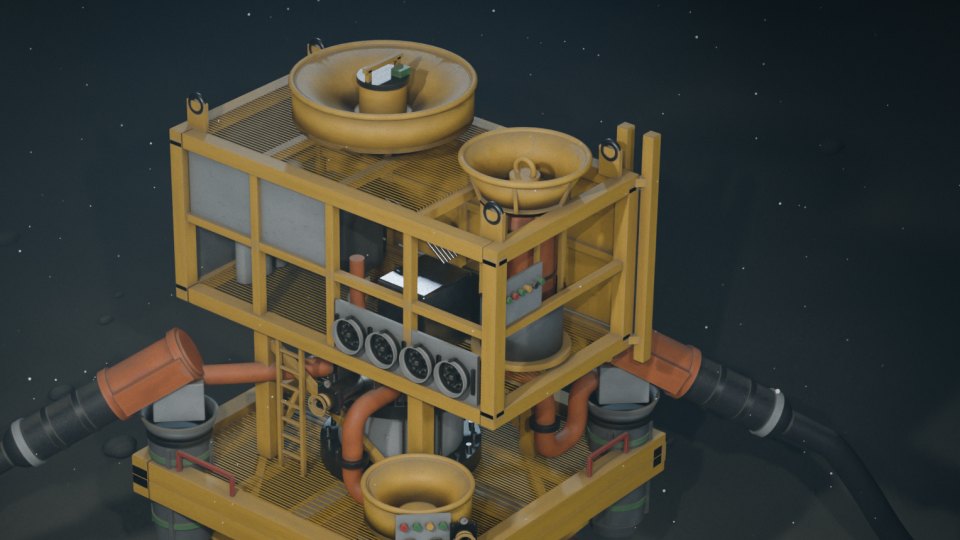
Subsea tree
The valve assembly on top of each well. It controls flow, isolates the reservoir and gives access for intervention.
Why can one well be offline for months while the tree is repaired?
API 17DISO 13628-4
Overdeep · Subsea Engineering Explained
What lies on the seabed, how it works, and why it costs what it costs. In clear language, built only from public standards.
Our intent
Overdeep explains subsea production systems to the people who work around them without being subsea engineers. Each video takes one piece of equipment and answers a business question: why it is delayed, why it fails, what it costs, who is responsible, and what contracts and regulators require.
The field
A typical deep-water development, from the wells on the seabed to the floating unit on the surface. Each part follows its own family of international standards.
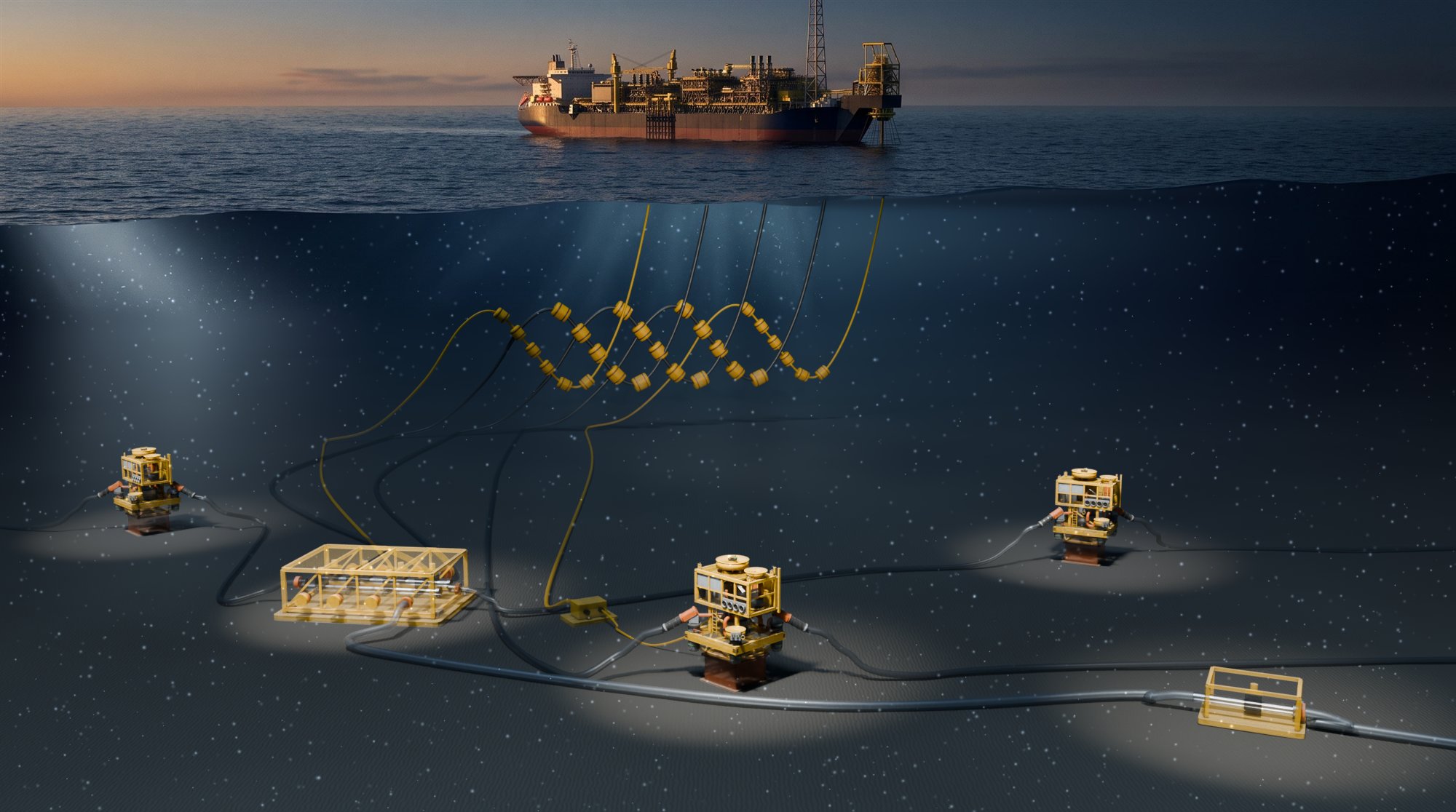
Illustrative render of a generic field. Not to scale, not a real project.
Systems
The valve assembly on top of each well. It controls flow, isolates the reservoir and gives access for intervention.
Why can one well be offline for months while the tree is repaired?
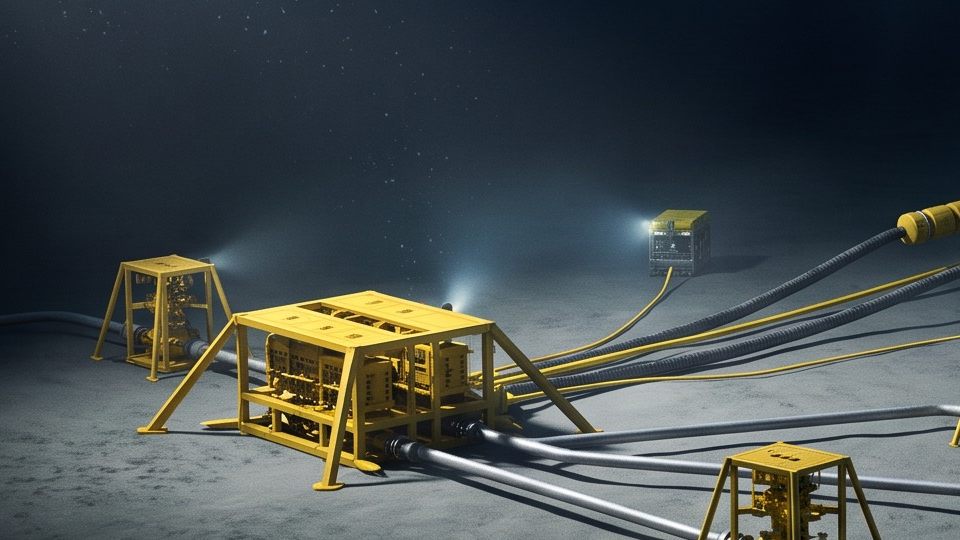
A seabed hub that gathers production from several wells into shared headers and routes it to the flowline.
Who pays when one structure ties up four wells?
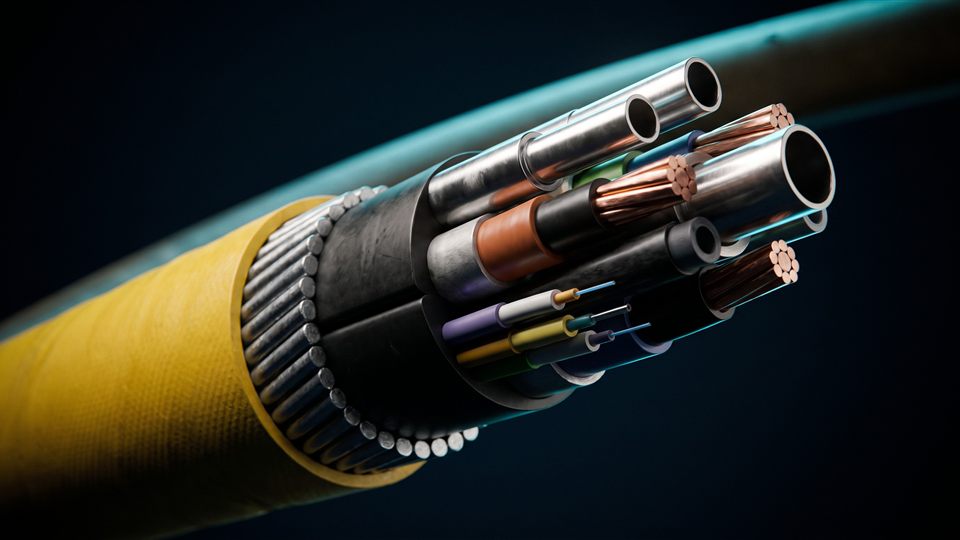
The lifeline from the host to the seabed, bundling hydraulic lines, chemical injection, power and communications.
Why is it one of the longest-lead items in a project?
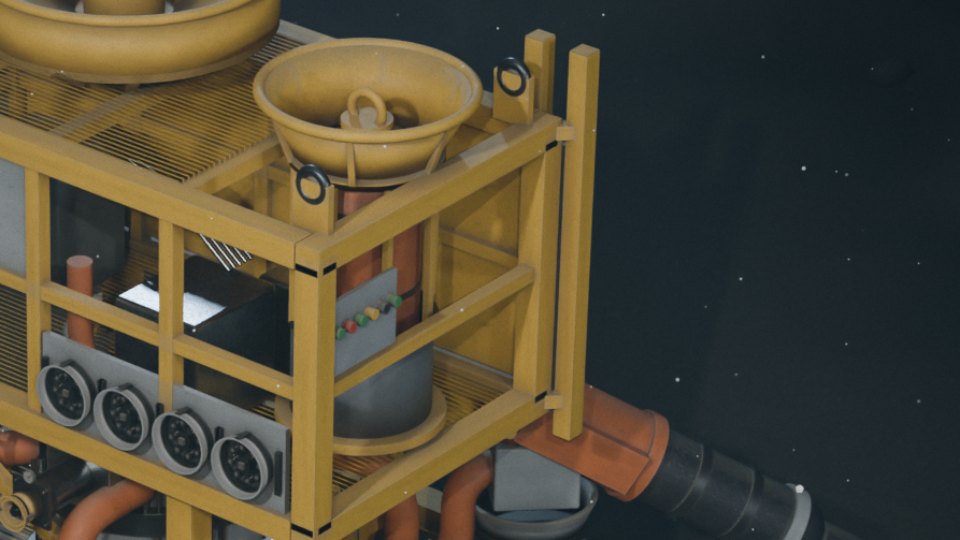
Subsea control modules open and close valves and report pressures and temperatures back to the control room.
What happens to production when communication is lost?
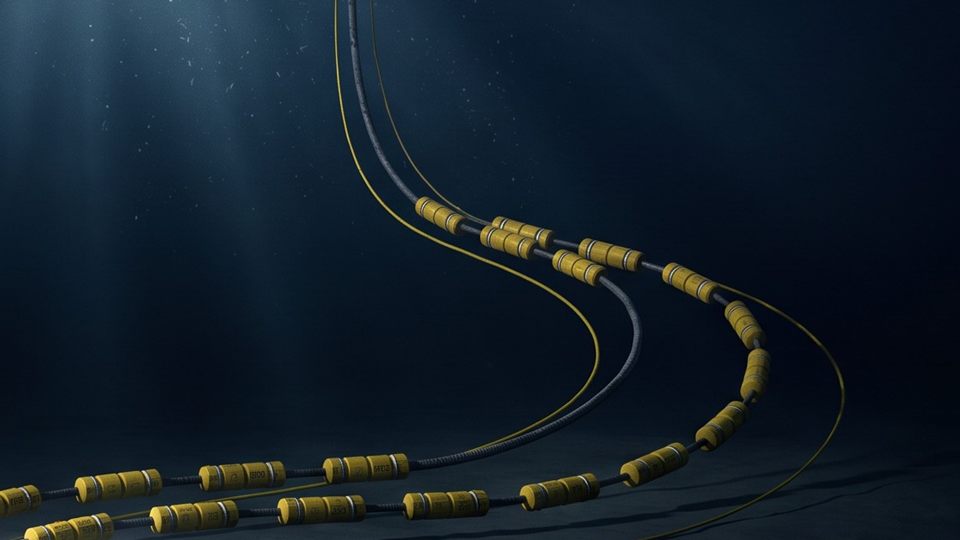
Rigid or flexible pipe that carries fluids along the seabed and up through the water column to the floating unit.
Why does a riser's design life drive the whole field economics?
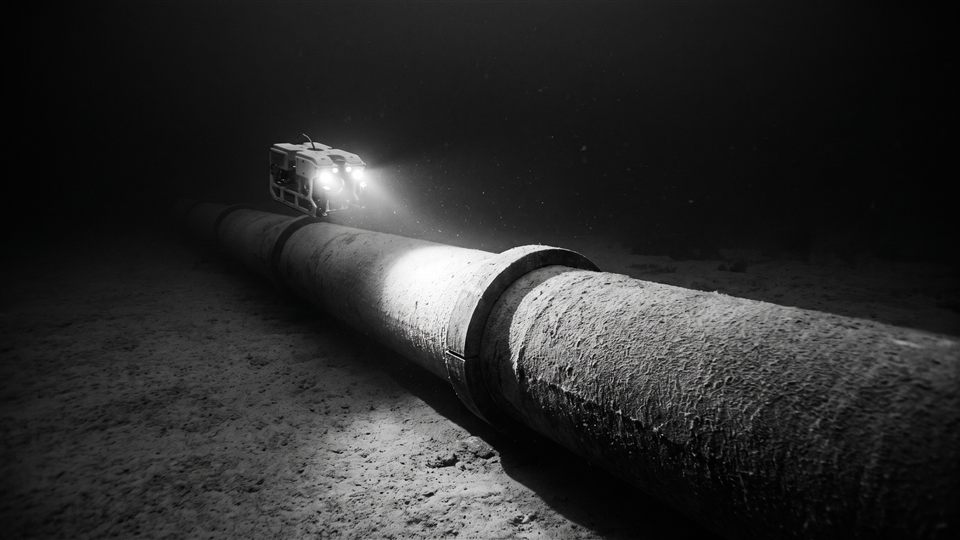
Export lines and the systems that protect them: wall thickness, on-bottom stability, cathodic protection and inspection.
How do you prove a 25-year-old line is still fit for service?
Why it is hard
of extra external pressure for roughly every 10 metres of seawater.
on every seal and housing at 2,000 m, about 2,900 psi, before the well even flows.
typical deep-water temperature, which drives hydrate and wax risk in produced fluids.
a common rated working pressure for subsea trees under API 17D. HPHT designs go further.
Standards library
Every Overdeep video is checked against the published standard that governs the equipment. These are the references we use most.
API 17ADesign and operation of subsea production systems: general requirementsAPI 17BFlexible pipe (recommended practice)API 17DSubsea wellhead and tree equipmentAPI 17ESubsea umbilicalsAPI 17FSubsea production control systemsAPI 17HROV and remote intervention interfaces on subsea systemsAPI 17JUnbonded flexible pipeAPI 17NSubsea reliability, technical risk and integrity managementAPI 17PSubsea structures and manifoldsAPI 17VSafety systems for subsea applicationsAPI RP 1111Offshore hydrocarbon pipelines: design, construction, operation and maintenanceISO 13628-1Subsea production systems: general requirements and recommendationsISO 13628-2Unbonded flexible pipe systems for subsea and marine applicationsISO 13628-4Subsea wellhead and tree equipmentISO 13628-5Subsea umbilicalsISO 13628-6Subsea production control systemsISO 13628-8ROV interfaces on subsea production systemsISO 13628-15Subsea structures and manifoldsISO 13623Pipeline transportation systemsISO 15589-2Cathodic protection of offshore pipeline systemsISO 15156Materials for use in H₂S-containing environmentsTitles are summarised for reference. The standards are published by API and ISO and are available from them. Overdeep is independent and not affiliated with any of these organisations.
How we work
01
Published standards, regulator guidance, conference papers and reference textbooks. Nothing else goes on screen.
02
Each video lists the standards and sources it draws on, so you can check every statement yourself.
03
No operator, client or project information. Figures are illustrative and come from open literature.
04
If we get something wrong, we fix it and say so. Write to us and we will review it.